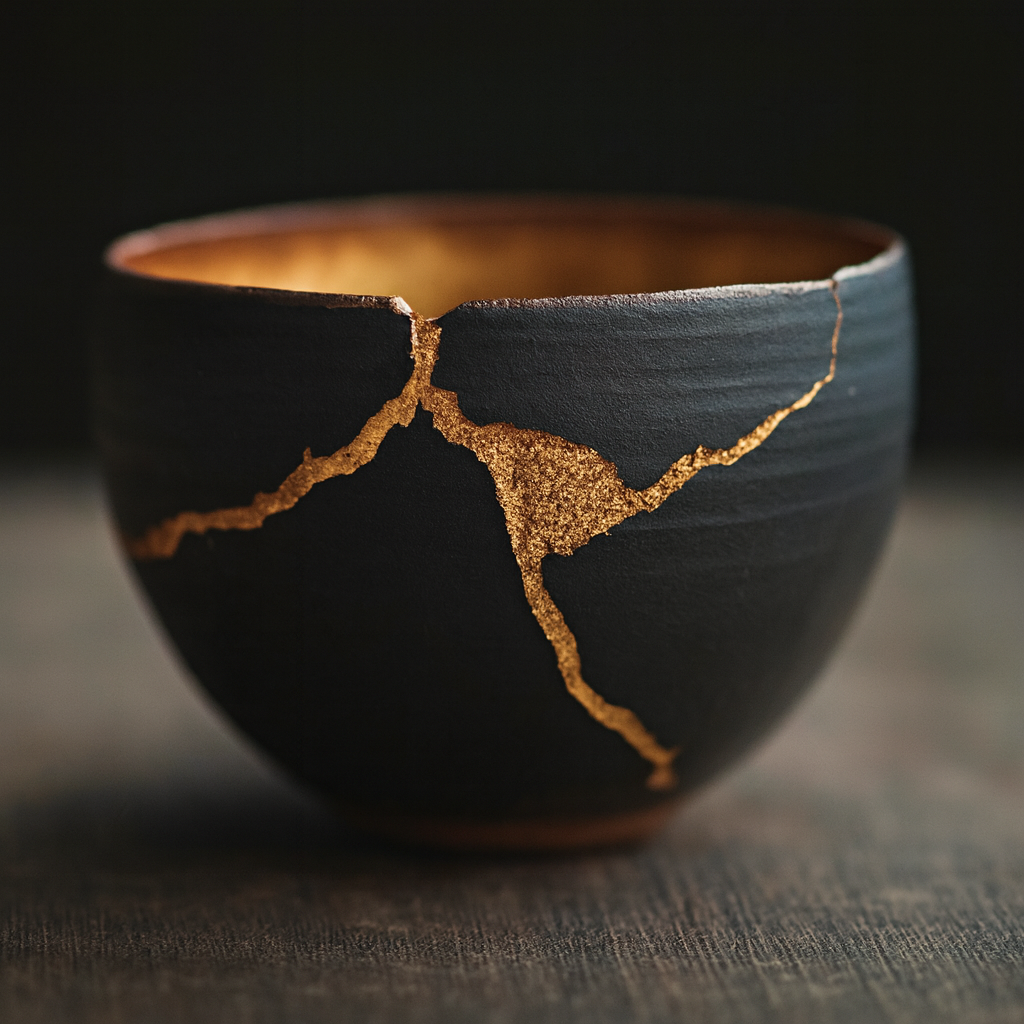
My work blends Iyengar alignment principles with somatic psychology and an interest in how lived experience becomes patterned in the body—sometimes as cohesion, sometimes as rupture. I teach with an appreciation for the imperfect and evolving nature of embodiment: how the body, much like a repaired vessel, carries its lines of fracture as evidence of resilience rather than flaw. Rather than directing students toward an idealized form, I invite exploration of how the body reorganizes itself through structure, pacing, and interoceptive awareness. Each class emphasizes agency, attunement, and an honest relationship with internal cues.
OFFERINGS
-
A methodical, research-supported approach to non-sleep deep rest based on contemporary adaptations of iRest protocols. Students are guided through stages of sensory withdrawal, body mapping, cognitive reframing, and awareness-based inquiry. This practice is beneficial for individuals seeking improved sleep architecture, reduced hyperarousal, and greater access to internal resources. No physical postures required.
-
A practice informed by Anodea Judith’s developmental chakra theory as presented in Eastern Body, Western Mind. Each class focuses on one energetic-developmental center and its psychological themes (e.g., safety, autonomy, identity, relational boundaries, expression, insight, or meaning-making). Postures, breathwork, and guided inquiry are used to explore how early-life imprints express somatically and how functional movement can support reintegration and internal coherence.
-
An Iyengar-influenced class emphasizing anatomical clarity, joint biomechanics, and functional alignment. Props and modifications are integrated to expand accessibility for diverse bodies, including individuals with mobility limitations, pain patterns, or asymmetries. Students learn to relate to structure before expression, developing proprioceptive intelligence and safer movement pathways.
-
A structured practice integrating autonomic nervous system education, breath mechanics, and interoceptive awareness. This class draws from somatic psychology and trauma-informed pedagogy to help students identify physiological markers of anxiety, interrupt activation patterns, and develop sustainable self-regulation skills. Movements emphasize joint stability, predictable sequencing, and controlled transitions to support psychological safety and emotional clarity.
-
A low-demand practice incorporating passive mobility work, diaphragmatic breathing, and subtle somatic techniques. Ideal for individuals recovering from physical or emotional fatigue or those seeking a quieter practice that prioritizes sensory downshifting, joint decompression, and autonomic recalibration.
-
A steady, classical practice combining held postures, breath patterns, and somatic observation. This class supports students in building strength, stability, and focused presence through slower pacing and methodical transitions. An excellent option for individuals seeking a straightforward but intellectually engaging approach to yoga.
-
An introduction to foundational elements of Ashtanga yoga framed through functional movement and trauma-informed adaptation. Students learn components of the Primary Series with an emphasis on breath stability, drishti awareness, and strength development without rigidity or performance pressure. A welcoming entry point to a traditionally structured practice.
-
A slow, precise flow grounded in nervous-system pacing, somatic awareness, and functional movement principles. Rather than performative or fast-paced sequencing, this class emphasizes directional movement, eccentric loading, motor coordination, and breath-synchronized transitions. Suitable for students who want to understand why they are moving, not just how.
-
Movement in water designed to reduce joint load, increase proprioceptive feedback, and support individuals with musculoskeletal limitations. The buoyancy of water allows for controlled range-of-motion exploration, balance reeducation, and breath-based pacing. Particularly supportive for older adults, individuals managing chronic pain, or those new to movement.